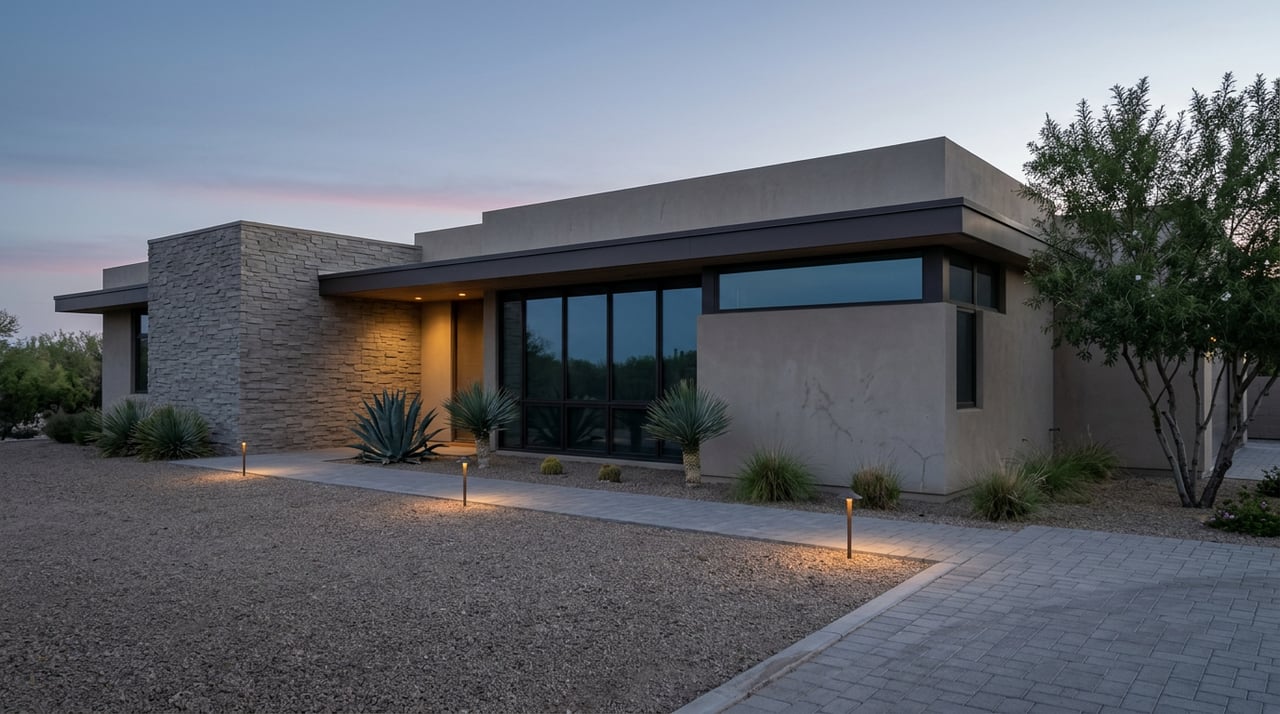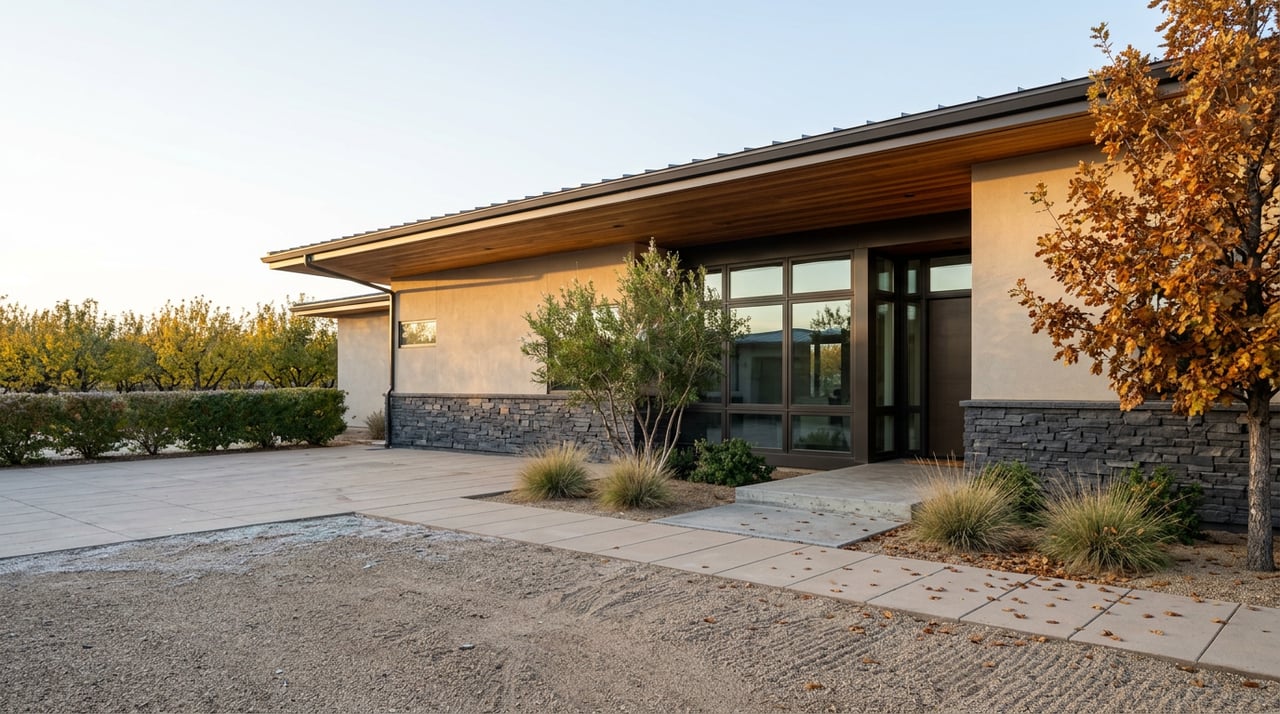
A buyer walks a corner lot on one of North Albuquerque Acres' older streets, the kind with a horse trailer parked behind the neighbor's shop building and a view of the Sandias that doesn't need explaining. The listing calls it just under an acre. Their agent, trying to be careful, subtracts the road easement and comes back with a number closer to .73 acres. Someone mentions that New Mexico requires three-quarters of an acre for a new septic system. The math suddenly looks tight, maybe even disqualifying, and the buyer starts wondering if this lot can even support a house.
That worry is common in this neighborhood, and it's built on a number that isn't the one the state actually uses.
Where The "One Acre" Number Comes From
North Albuquerque Acres exists in its current shape because of a real estate transaction from nearly a century ago. In 1931, the Norins Realty Company of California bought 5,700 acres out of the Elena Gallegos Land Grant and platted the ground into a grid of rectangular, one-acre lots, most of them sold sight unseen by mail to buyers scattered across the country. A standard lot ran 165 feet by 264 feet to the centerline of the road, with a 60-foot public road easement cut out of that footprint.
That plat is why the neighborhood still looks the way it does. Homes here weren't built to a developer's template. A late-1970s ranch sits next to a 1990s Southwest contemporary next to a custom Pueblo Revival finished last year, because lots sold and built one at a time across five decades. It's also why, nearly a century later, real estate copy about the neighborhood almost always includes a correction: yes, the plat says one acre, but here's the real number.
The Number Every Recent Guide Subtracts
That correction usually looks the same. Take the 165-by-264 lot, remove the 60-foot road easement, and you land on somewhere between .73 acres for a corner lot and .89 acres for an interior one. Local guides treat this as the honest number, the one that accounts for the fact that you don't actually own the pavement in front of your house.
It's a reasonable instinct. It's also the wrong number to reach for the moment septic comes up.
The Number The State Actually Uses
New Mexico requires a minimum of three-quarters of an acre to install a new conventional septic system, a threshold enforced by the New Mexico Environment Department's Liquid Waste Program. Where that threshold gets calculated differently than most buyers expect is in what counts as the lot.
According to the New Mexico Association of REALTORS' septic disclosure guidance, lot size for this purpose is calculated by adding or subtracting only liquid waste disposal easements. Roadway easements are not part of that subtraction. In plain terms: the 60-foot road easement that local guides remove to produce the .73-to-.89-acre figure doesn't get removed when the state decides whether a lot clears the septic threshold.
That means a corner lot marketed as .73 acres net may still read closer to a full acre when NMED does its own calculation, comfortably above the 0.75-acre line rather than sitting right on top of it. The number that sounds more careful, the one that accounts for the road, is the wrong number for the one decision it's usually invoked to answer.
Here's the practical difference:
| What real estate copy subtracts | What the septic lot-size test subtracts | |
|---|---|---|
| Road easement (60 ft) | Yes, produces .73 to .89 acres | No |
| Liquid waste disposal easement | Not typically addressed | Yes |
| Resulting number | "Net" lot size | Legal lot size for septic eligibility |
If you're standing on a corner lot and someone tells you it's too small for a new system because the net acreage comes in under .75, that claim deserves a second look before you walk away or renegotiate.
The Grandfather Clause That Covers Most Existing Homes
None of this matters much if you're buying a home that already has a working septic system. New Mexico's liquid waste rules grandfather existing systems: if a home has a permitted septic system on record and that system passes inspection at the time of sale, it's allowed to remain in place even on a lot smaller than the current 0.75-acre minimum. The state tightened its small-lot rules around 1990, but systems installed and permitted before that change generally keep their status as long as they still function and pass the pre-sale inspection New Mexico requires on every septic transfer.
Since the North Albuquerque Acres plat dates to 1931, the vast majority of homes here with an existing septic system are being evaluated on that older, more forgiving standard, not the lot-size math at all. The lot-size test matters most in two specific situations: someone buying a vacant lot to build new, or someone whose existing system has failed and needs full replacement rather than repair, which can trigger a new permit under current rules.
Water Isn't Always Part Of This Conversation
Not every property in North Albuquerque Acres runs on well and septic. Over the decades, sections of the original grid were replatted into subdivisions with paved streets, protective covenants, and connections to city or community water and sewer, some built out as single, large-tract developments and others assembled lot by lot into buildable tracts. Heritage Hills, Heritage East, Nor Este Estates, and Vineyard Estates are among the names that came out of that process. If a listing sits inside one of these later subdivisions, the septic lot-size question likely doesn't apply at all, because the property is on a municipal or community system.
The original grid lots, the ones still carrying their 1931 dimensions, are where well and septic remain common and where this lot-size distinction actually changes how you should read a listing.
What To Check Before You Make An Offer
If you're looking at a vacant lot or an older home in North Albuquerque Acres and septic comes up, a few questions are worth asking before you assume anything:
- Is the property inside Albuquerque city limits or unincorporated Bernalillo County? Bernalillo County runs its own onsite wastewater ordinance for unincorporated areas, while incorporated portions of the county, including the City of Albuquerque, are regulated directly by NMED. Boundary lines can run through the middle of a plat like this one, so confirm which jurisdiction actually governs the parcel.
- What does the recorded plat say the lot size is, before any easement is subtracted? That recorded figure, adjusted only for liquid waste easements if any exist, is closer to what NMED will use.
- If there's an existing system, does it have a permit on file, and has it passed a recent inspection? That answer determines whether you're dealing with the lot-size question at all or the separate grandfather-and-inspection question.
None of this replaces a site evaluation from a registered liquid waste professional, since soil conditions and depth to groundwater still factor into what kind of system a given lot can support. But it does mean the acreage conversation should start with the plat and the jurisdiction, not with a subtraction that was never designed to answer the septic question in the first place.
FAQ
Does this affect homes already connected to city sewer? No. The lot-size and easement calculations described here only apply to properties using or proposing a septic system. Homes on municipal or community sewer, common in the neighborhood's later-platted subdivisions, aren't subject to this threshold.
Where can I find the recorded acreage for a specific lot? Bernalillo County's plat and assessor records show the original recorded dimensions for lots platted under the 1931 North Albuquerque Acres plat, which is the starting point before any easement adjustment.
Who do I contact to confirm septic eligibility on a specific parcel? The New Mexico Environment Department's Liquid Waste Program handles permitting for incorporated areas including the City of Albuquerque, while Bernalillo County's own wastewater ordinance covers unincorporated portions of the county. Confirming jurisdiction first will point you to the right office.
Does a failed septic system on an older lot get the grandfathered treatment too? Generally not for a full replacement. Grandfathering protects a system that's still functioning and passes inspection. A system that fails and needs replacement is typically evaluated under current lot-size rules, which is exactly when the road-easement distinction becomes relevant again.
North Albuquerque Acres rewards buyers who read past the marketing correction and get to the number that actually governs the parcel. If you're evaluating a lot here, whether it's raw ground or a home with a well in the backyard, Property Partners, Inc. can help you sort out which questions matter before you're under contract. Get Your Instant Home Valuation to see where a specific property stands, then let's talk through what's underneath the listing.